AI Development Trends Shaping the Tech Industry in 2026
Explore the latest AI development trends and what they mean for tech companies looking to stay competitive.
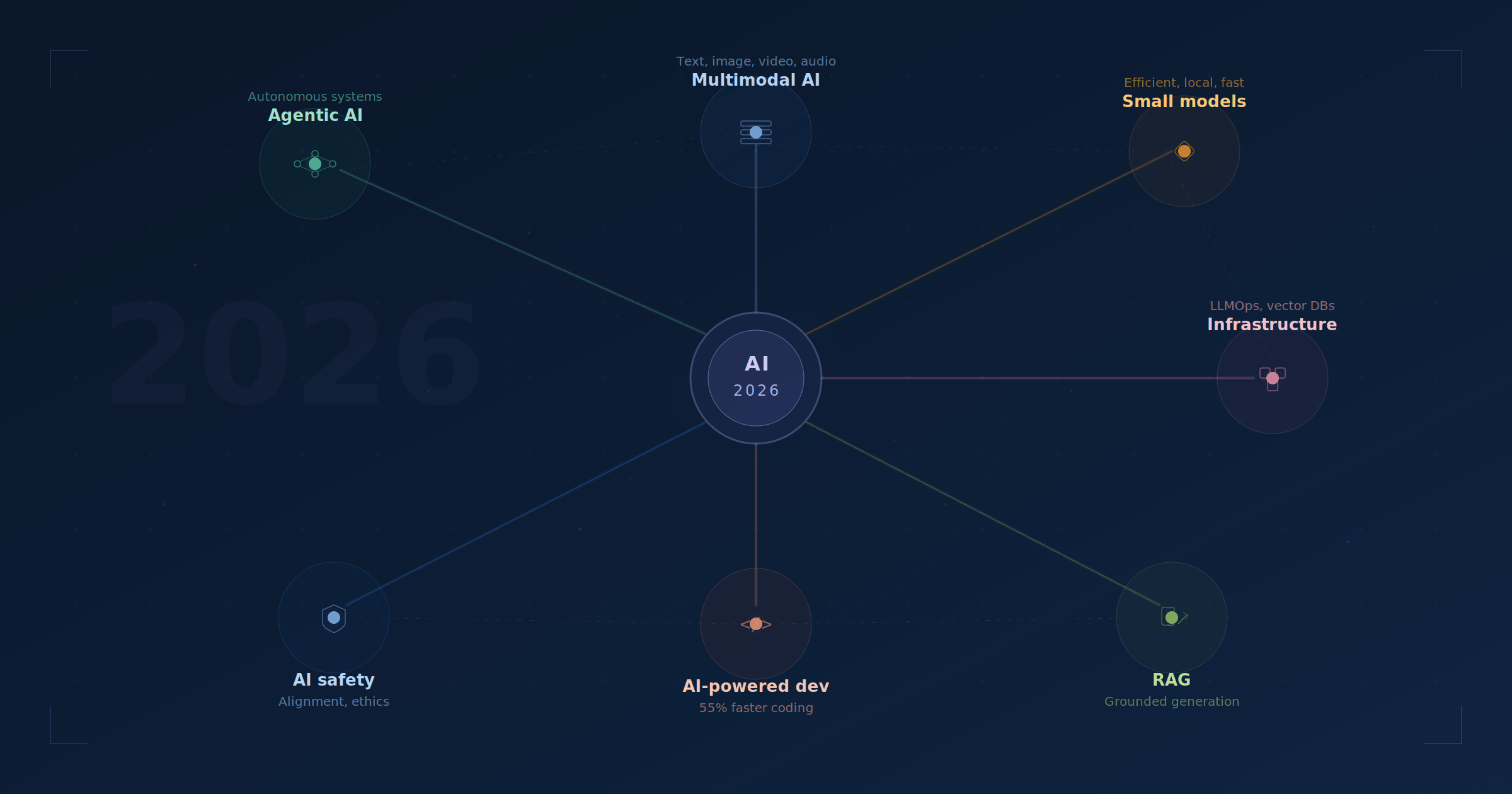
Artificial Intelligence continues to evolve at a breathtaking pace. As we progress through 2026, new trends are emerging that will shape how companies build, deploy, and scale AI solutions. Here’s what tech leaders need to know.
1. Agentic AI Systems
The shift from simple chatbots to autonomous AI agents is accelerating:
What Are Agentic Systems?
Agentic AI systems can:
- Plan multi-step workflows independently
- Make decisions based on goals
- Interact with tools and APIs
- Learn from outcomes and adapt
Real-World Applications
- Customer service agents that resolve complex issues end-to-end
- DevOps agents that monitor, diagnose, and fix infrastructure issues
- Research agents that gather and synthesize information
- Sales agents that qualify leads and schedule meetings
Building Agentic Systems
Key technologies enabling agentic AI:
- Large Language Models (LLMs) as the reasoning engine
- Function calling for tool use
- Vector databases for memory
- Reinforcement learning for improvement
2. Multimodal AI
AI systems are no longer limited to text:
Beyond Text
Modern AI can process and generate:
- Images (DALL-E, Midjourney, Stable Diffusion)
- Video (Sora, Runway)
- Audio (ElevenLabs, Whisper)
- Code (GitHub Copilot, Cursor)
Impact on Products
Companies are building:
- AI-powered design tools
- Automated video editing platforms
- Voice-first applications
- Code generation assistants
3. Small Language Models (SLMs)
Not every problem needs GPT-4:
The Case for SLMs
Smaller models offer:
- Lower latency
- Reduced costs
- Easier deployment
- Better privacy (can run locally)
When to Use SLMs
- Domain-specific tasks
- On-device applications
- High-volume, low-complexity use cases
- Privacy-sensitive applications
4. AI Infrastructure Evolution
The tooling around AI is maturing rapidly:
Vector Databases
Purpose-built for AI applications:
- Pinecone
- Weaviate
- Qdrant
- ChromaDB
LLM Operations (LLMOps)
New tools for managing AI in production:
- Prompt management and versioning
- Model monitoring and evaluation
- Cost optimization
- Guardrails and safety
AI Orchestration
Frameworks for building complex AI systems:
- LangChain
- LlamaIndex
- AutoGen
- CrewAI
5. Retrieval-Augmented Generation (RAG)
RAG has become the standard approach for building AI applications with company data:
Why RAG Works
- Reduces hallucinations
- Provides source attribution
- Enables real-time data access
- More cost-effective than fine-tuning
RAG Best Practices
- Chunk documents intelligently
- Use hybrid search (vector + keyword)
- Implement re-ranking
- Monitor retrieval quality
6. AI-Powered Development
Developers are using AI to build faster:
Code Generation
Tools transforming development:
- GitHub Copilot
- Cursor
- Codeium
- Tabnine
Impact on Productivity
Studies show developers using AI assistants:
- Write code 55% faster
- Experience less cognitive load
- Solve problems more creatively
- Learn new technologies quicker
7. AI Safety and Alignment
As AI becomes more powerful, safety becomes critical:
Key Concerns
- Bias and fairness
- Privacy and data protection
- Transparency and explainability
- Robustness and reliability
Best Practices
- Implement human-in-the-loop systems
- Regular bias audits
- Clear AI usage policies
- Comprehensive testing
- Ongoing monitoring
Skills for the AI Era
What should engineers be learning?
Technical Skills
- Prompt engineering
- Vector databases
- LLM APIs and frameworks
- RAG architecture
- Fine-tuning techniques
Domain Knowledge
- Understanding LLM capabilities and limitations
- AI ethics and safety
- Cost optimization strategies
- User experience with AI
Hiring for AI Capabilities
Building an AI-competent team:
What to Look For
- Curiosity and willingness to learn
- Strong fundamentals in ML/AI
- Experience with modern AI tools
- Product thinking
- Ethical awareness
Where to Find Talent
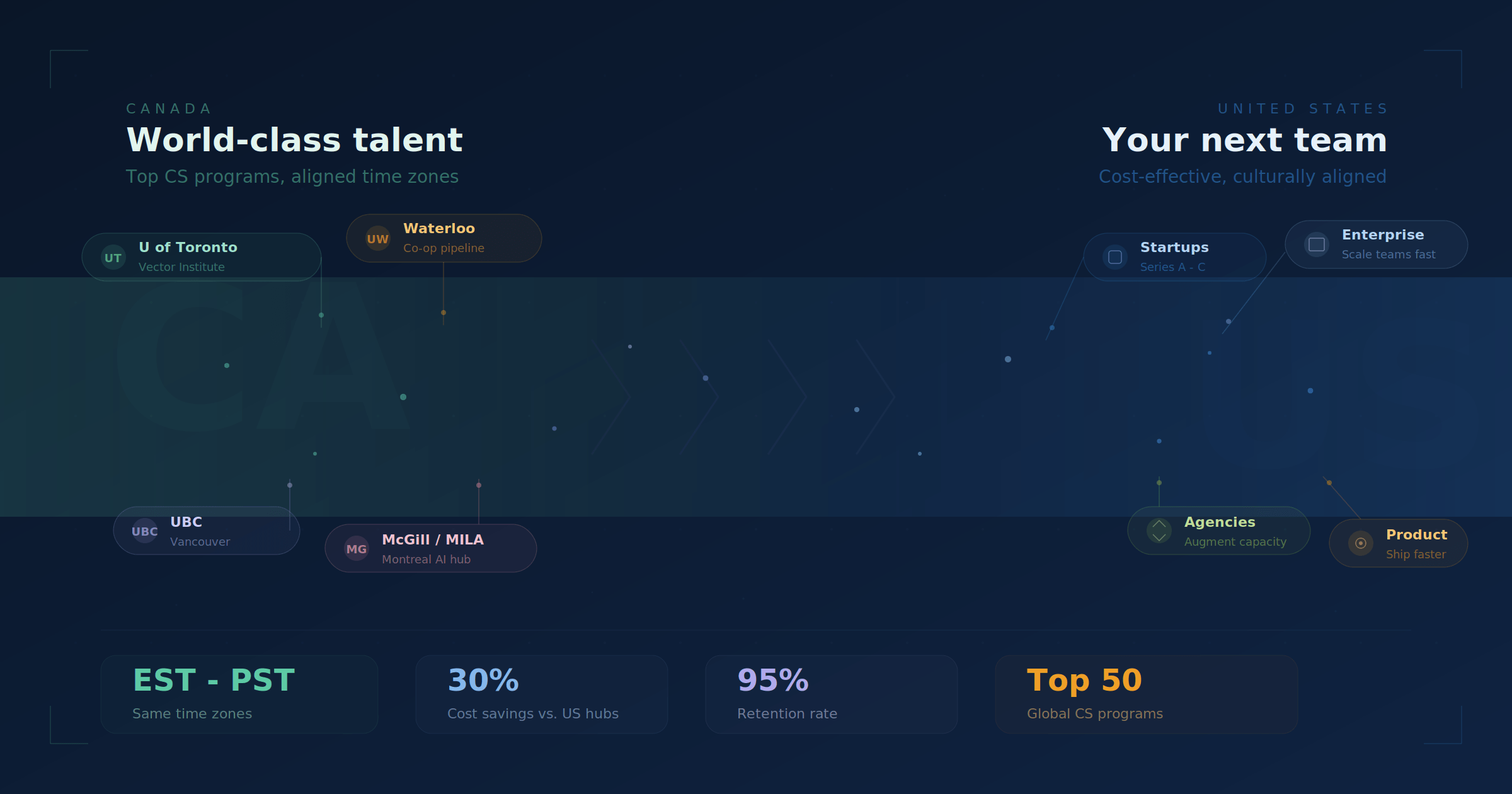
Canadian universities are producing exceptional AI talent:
- University of Toronto (Vector Institute)
- University of Montreal (MILA)
- University of Alberta (Amii)
- University of British Columbia
The DecodeTalent Approach
At DecodeTalent, we’re helping companies build teams ready for the AI era:
- AI-Skilled Developers: Canadian talent with cutting-edge AI expertise
- Rapid Deployment: Get AI-capable engineers on your team quickly
- Future-Proof Teams: Engineers who stay current with the latest developments
The AI revolution is here, and the companies that thrive will be those that can attract and retain top AI talent.
Partner with us to build your AI-ready team today.